
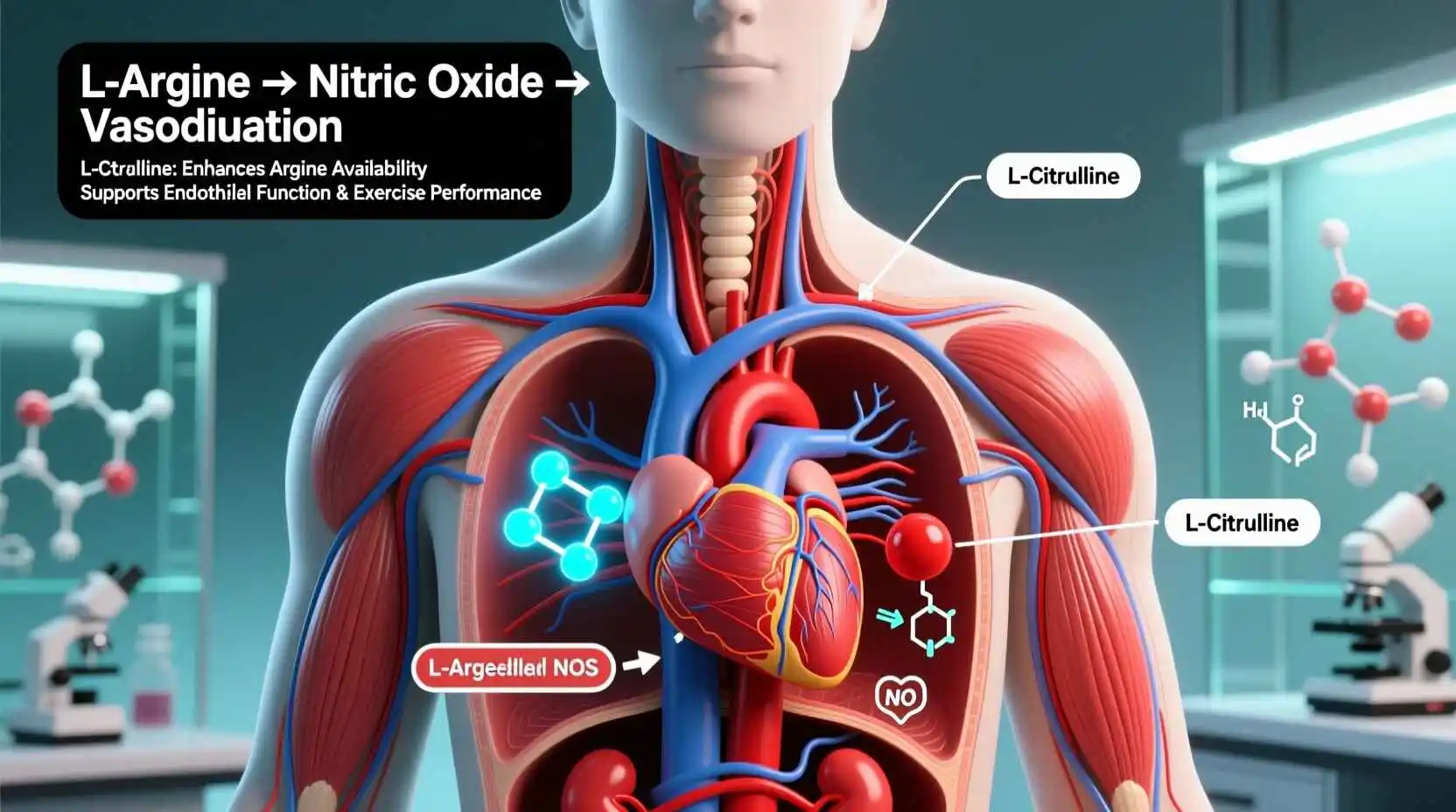
4.1 Biochemical Synergy Between L-Arginine and L-Citrulline
The Citrulline-Arginine Cycle The biochemical interdependence between L-arginine and L-citrulline represents one of nature’s most elegant metabolic cycles. When nitric oxide synthase (NOS) converts L-arginine to NO, it simultaneously produces L-citrulline as a byproduct. This L-citrulline is not merely a waste product but is efficiently recycled back to L-arginine through a two-step process involving argininosuccinate synthase (ASS) and argininosuccinate lyase (ASL), primarily in the kidneys.
This cycle creates a self-sustaining system where L-citrulline supplementation effectively increases L-arginine availability for NO production. Studies show that oral L-citrulline administration (3-6 grams) elevates plasma L-arginine levels by 60-80% for up to 8 hours, compared to only 20-30% elevation for 1-2 hours with an equivalent dose of L-arginine. This prolonged elevation is due to L-citrulline’s resistance to intestinal and hepatic metabolism, allowing efficient renal conversion to L-arginine.
The cycle’s efficiency is remarkable—approximately 80% of orally administered L-citrulline is converted to L-arginine in the kidneys. This conversion rate far exceeds the bioavailability of direct L-arginine supplementation, which is limited by extensive first-pass metabolism and degradation by intestinal arginase enzymes.

Overcoming the Arginase Challenge One of the key advantages of the L-citrulline to L-arginine pathway is its ability to bypass the “arginase trap.” Arginase enzymes, which convert L-arginine to ornithine and urea, are upregulated in many pathological conditions including cardiovascular disease, diabetes, aging, and cancer. This increased arginase activity depletes L-arginine pools, limiting its availability for NO synthesis and contributing to endothelial dysfunction.
L-Citrulline, being resistant to arginase metabolism, provides an alternative pathway to maintain L-arginine levels under these conditions. Studies in models of cardiovascular disease show that L-citrulline supplementation restores NO production and endothelial function even when arginase activity is elevated. This makes L-citrulline particularly valuable in conditions where L-arginine alone may be ineffective due to high arginase activity.
Enhancing NO Synthase Efficiency Beyond simply providing substrate, the L-citrulline to L-arginine pathway enhances NOS efficiency. When L-arginine levels are low, NOS can become “uncoupled,” producing superoxide instead of NO. This uncoupling contributes to oxidative stress and further endothelial dysfunction. By maintaining adequate L-arginine concentrations, L-citrulline helps keep NOS in its coupled state, favoring NO production over superoxide generation.
Additionally, L-citrulline may increase the expression of NOS enzymes themselves. Studies in endothelial cells show that L-citrulline upregulates eNOS expression by 30-40%, further enhancing NO production capacity. This combined effect of providing substrate and increasing enzyme expression creates a powerful synergistic mechanism for improving NO bioavailability.
4.2 Clinical Benefits of Combined Supplementation
Cardiovascular Applications The combination of L-arginine and L-citrulline produces additive benefits for cardiovascular health. Clinical studies show that the combination (3 grams each daily) reduces systolic blood pressure by 10-12 mmHg, compared to 5-7 mmHg with either amino acid alone. This enhanced effect is attributed to more sustained elevation of plasma arginine levels and improved NOS coupling.
In patients with coronary artery disease, the combination improves endothelial function (measured by FMD) by 4.5%, compared to 2.5% with L-citrulline alone and 1.5% with L-arginine alone. The combination also shows greater reductions in markers of oxidative stress (malondialdehyde by 35%) and inflammation (hs-CRP by 25%) compared to monotherapy.
For peripheral artery disease, the combination of L-citrulline (3 grams twice daily) with L-arginine (3 grams twice daily) improves walking distance by 280%, compared to 180% with L-citrulline alone and 150% with L-arginine alone. This synergistic effect is particularly valuable in patients with severe claudication who have limited therapeutic options.
Exercise Performance Enhancement The combination of L-arginine and L-citrulline produces superior ergogenic effects compared to either amino acid alone. Studies in resistance-trained athletes show that a pre-workout supplement containing 6 grams L-citrulline and 3 grams L-arginine increases repetitions to failure by 30%, compared to 20% with L-citrulline alone and 10% with L-arginine alone.
For endurance performance, the combination improves time trial performance by 4-5%, compared to 2-3% with L-citrulline alone and 1-2% with L-arginine alone. The mechanisms include enhanced NO production, improved muscle perfusion, increased ATP regeneration, and better ammonia clearance.
The combination also produces superior recovery benefits. Studies show that daily supplementation with 6 grams L-citrulline and 3 grams L-arginine reduces muscle soreness by 50% and creatine kinase by 40%, compared to 30% and 25% reductions with L-citrulline alone. This enhanced recovery allows for greater training volumes and faster adaptation.
Metabolic Health Applications For metabolic health, the combination of L-arginine and L-citrulline produces additive improvements in insulin sensitivity and glucose metabolism. Clinical trials in type 2 diabetic patients show that the combination (3 grams each twice daily) improves insulin sensitivity by 45%, compared to 35% with L-citrulline alone and 25% with L-arginine alone. This is accompanied by greater reductions in HbA1c (1.2% vs. 0.8% and 0.6%) and fasting glucose (25 mg/dL vs. 18 mg/dL and 12 mg/dL).
In obesity and metabolic syndrome, the combination reduces visceral adiposity by 15%, compared to 10% with L-citrulline alone and 5% with L-arginine alone. The mechanisms include enhanced fat oxidation, improved mitochondrial function, and reduced inflammation in adipose tissue.
4.3 Optimal Supplementation Strategies
Dosage Considerations Based on clinical evidence, optimal dosing strategies vary depending on the specific health goal:
For cardiovascular health, a combination of 3 grams L-citrulline and 3 grams L-arginine daily provides sustained benefits for blood pressure reduction and endothelial function improvement. This can be taken as a single morning dose or split into morning and evening doses for more stable plasma levels.
For exercise performance, 6-8 grams L-citrulline malate combined with 3 grams L-arginine taken 60 minutes before exercise produces optimal ergogenic effects. For chronic training adaptations, additional 3 grams of each amino acid can be consumed on rest days.
For metabolic health, 3 grams L-citrulline and 3 grams L-arginine twice daily (morning and evening) provides the most consistent improvements in insulin sensitivity and glucose metabolism. This split dosing maintains more stable plasma levels throughout the day.
For erectile function, 3 grams L-citrulline and 1.5 grams L-arginine taken daily for at least 8 weeks produces significant improvements in erection hardness and sexual satisfaction. This can be taken as a single dose or split into two doses.
Timing and Formulations Timing of supplementation is crucial for maximizing benefits:
For acute exercise performance, consumption 60-90 minutes before activity allows for peak plasma levels during exercise. The presence of carbohydrates with the supplement may enhance absorption and utilization.
For cardiovascular and metabolic benefits, consistent daily intake is more important than specific timing. However, morning administration may align with the diurnal rhythm of NO production and endothelial function.
Several formulations are available, each with specific advantages:
- L-Citrulline malate (1:1 ratio of citrulline to malate) enhances solubility and provides malate for the Krebs cycle, potentially improving energy production.
- Sustained-release formulations provide more stable plasma levels over 8-12 hours.
- Effervescent tablets enhance absorption through improved solubility and may reduce gastrointestinal discomfort.
Synergistic Nutrients The effects of L-arginine and L-citrulline can be enhanced by combining them with other nutrients that support NO production or function:
Antioxidants like vitamin C (500-1000 mg), vitamin E (200-400 IU), and alpha-lipoic acid (300-600 mg) protect NO from oxidative inactivation and enhance NOS coupling. This combination is particularly valuable in conditions of high oxidative stress like diabetes and cardiovascular disease.
Dietary nitrates (from beetroot juice or spinach) provide an alternative pathway for NO production via the nitrate-nitrite-NO pathway. Combining 500 mL beetroot juice with L-citrulline produces additive vasodilatory effects and exercise performance benefits.
Co-factors for NOS enzymes, including vitamin B6 (10-50 mg), vitamin B12 (100-500 mcg), and folate (400-800 mcg), support optimal enzyme function. This is particularly important in individuals with genetic polymorphisms affecting folate metabolism.
5: Safety, Contraindications, and Special Populations
5.1 Safety Profile and Adverse Effects
General Safety L-Arginine and L-citrulline have excellent safety profiles when used at recommended doses. Extensive clinical trials and post-marketing surveillance data support their safety across various populations. The U.S. Food and Drug Administration (FDA) has granted Generally Recognized as Safe (GRAS) status to both amino acids for use in foods and supplements.
Acute toxicity studies show that oral doses up to 30 grams of L-arginine and 15 grams of L-citrulline are well-tolerated by healthy adults. The estimated lethal dose (LD50) for oral L-arginine in animals exceeds 10 grams per kilogram of body weight, indicating a wide margin of safety.
Long-term safety studies (up to 12 months) with daily doses of 6-9 grams of L-citrulline and 3-6 grams of L-arginine show no significant adverse effects on liver, kidney, or hematological parameters. There is no evidence of dependence or withdrawal symptoms with discontinuation of supplementation.
Gastrointestinal Effects The most common adverse effects of both amino acids are gastrointestinal in nature, particularly at higher doses:
L-Arginine may cause dose-dependent gastrointestinal discomfort including nausea, abdominal cramps, diarrhea, and bloating. These effects are typically mild and transient, occurring in 5-10% of individuals at doses above 10 grams daily. Starting with lower doses (2-3 grams) and gradually increasing can minimize these effects.
L-Citrulline is generally better tolerated, with gastrointestinal side effects reported in less than 5% of individuals even at doses of 10 grams daily. When side effects do occur, they are typically mild and include transient nausea or diarrhea. The malate form of L-citrulline may cause fewer gastrointestinal issues due to improved solubility and absorption.
Metabolic and Laboratory Effects Both amino acids can affect certain laboratory parameters, though these changes are rarely clinically significant:
L-Arginine may transiently increase plasma potassium levels, particularly in individuals with renal impairment or those taking potassium-sparing medications. This effect is dose-dependent and rarely results in hyperkalemia at recommended doses.
L-Citrulline may increase plasma creatinine levels due to enhanced creatine synthesis and muscle metabolism. This does not reflect actual kidney dysfunction but rather increased production. Studies show that while creatinine levels may rise by 0.1-0.2 mg/dL, actual glomerular filtration rate (GFR) remains unchanged or slightly improved.
Both amino acids can affect glucose metabolism, potentially lowering blood glucose levels. This effect is generally beneficial in individuals with insulin resistance but may require monitoring in diabetic patients on glucose-lowering medications to prevent hypoglycemia.
5.2 Contraindications and Drug Interactions
Absolute Contraindications While generally safe, there are specific situations where L-arginine and L-citrulline supplementation should be avoided:
Individuals with a history of severe allergic reactions to either amino acid or their components should avoid supplementation. Though rare, hypersensitivity reactions including rash, pruritus, and angioedema have been reported.
Patients with acute herpes simplex virus (HSV) infections should avoid L-arginine supplementation. L-Arginine promotes HSV replication by competing with lysine for cellular uptake. Clinical studies show that high-dose L-arginine can increase HSV outbreak frequency and severity. L-Citrulline is less problematic in this regard but should still be used with caution in individuals with frequent HSV outbreaks.
Individuals with severe asthma should use L-arginine with caution. Some studies suggest that L-arginine may potentiate airway inflammation in susceptible individuals, though the evidence is inconsistent. L-Citrulline appears safer in this population.
Relative Contraindications Several conditions require careful consideration before supplementing with these amino acids:
Patients with severe renal impairment (CrCl < 30 mL/min) should use L-arginine and L-citrulline with caution and under medical supervision. While not nephrotoxic, these amino acids may accumulate in renal failure and potentially exacerbate electrolyte imbalances. Lower doses (1-2 grams daily) with close monitoring are recommended if supplementation is necessary.
Individuals with liver disease, particularly hepatic encephalopathy, should use these amino acids under medical guidance. While they can be beneficial for ammonia detoxification in mild liver disease, high doses may paradoxically worsen encephalopathy in severe cases by increasing ammonia production.
Patients with a history of hypotension should use these amino acids cautiously, particularly when taking antihypertensive medications. The blood pressure-lowering effects may be additive, potentially causing symptomatic hypotension.
Drug Interactions Several significant drug interactions have been identified:
Antihypertensive medications including ACE inhibitors, ARBs, calcium channel blockers, and diuretics may have additive blood pressure-lowering effects with L-arginine and L-citrulline. Patients taking these medications should monitor blood pressure closely and may need dose adjustments.
Nitrates (nitroglycerin, isosorbide dinitrate) and PDE5 inhibitors (sildenafil, tadalafil) also have additive vasodilatory effects. Concurrent use may cause excessive hypotension and should be avoided or used under close medical supervision.
Potassium-sparing diuretics (spironolactone, eplerenone, triamterene) may increase the risk of hyperkalemia when combined with L-arginine, which can modestly increase potassium levels. Regular monitoring of serum potassium is recommended.
Anticoagulants and antiplatelet agents (warfarin, clopidogrel, aspirin) may have increased bleeding risk when combined with high-dose L-arginine, which inhibits platelet aggregation. While the risk is generally low at recommended doses, caution is warranted in individuals with bleeding disorders or those undergoing surgery.
5.3 Special Populations
Pregnancy and Lactation The safety of L-arginine and L-citrulline during pregnancy and lactation has not been extensively studied in large controlled trials. However, available evidence suggests that dietary intake from food sources is safe, while high-dose supplementation should be approached with caution:
Several clinical trials have used L-arginine supplementation (3-6 grams daily) in high-risk pregnancies to prevent preeclampsia, with no reported adverse effects on mother or fetus. These studies show significant reductions in preeclampsia risk (50-70%) and improved fetal growth parameters.
L-Citrulline has been less studied in pregnancy, though its safety profile suggests it may be a reasonable alternative to L-arginine for pregnant women who experience gastrointestinal side effects. Animal studies show no teratogenic effects at doses equivalent to 3-6 grams daily in humans.
During lactation, both amino acids appear safe at moderate doses. Small amounts are naturally present in breast milk, and supplementation may even enhance milk production in some women. However, high-dose supplementation (>6 grams daily) should be avoided until more safety data are available.
Pediatric Populations L-Arginine and L-citrulline have been studied in pediatric populations for specific medical conditions with generally favorable safety profiles:
In children with urea cycle disorders, L-arginine (200-600 mg/kg/day) and L-citrulline (100-200 mg/kg/day) are standard treatments to promote ammonia detoxification. Long-term studies show these doses are safe and effective in preventing hyperammonemic crises.
For pediatric cardiovascular conditions, including pulmonary hypertension and Kawasaki disease, L-arginine (100-200 mg/kg/day) has been used safely in clinical trials. Improvements in endothelial function and clinical outcomes have been reported without significant adverse effects.
In pediatric sports nutrition, limited data are available. While these amino acids are likely safe at appropriate doses (based on weight), their use for performance enhancement in children and adolescents should be approached cautiously and under professional guidance.
Geriatric Populations Older adults may particularly benefit from L-arginine and L-citrulline supplementation due to age-related declines in NO production and endothelial function. However, special considerations apply:
Age-related reductions in renal function may require lower doses or less frequent administration. Starting with half the standard adult dose (1.5-3 grams daily) and gradually increasing based on tolerance and response is prudent.
Polypharmacy is common in older adults, increasing the risk of drug interactions. Particular attention should be paid to interactions with antihypertensives, anticoagulants, and diabetes medications.
Age-related changes in gastrointestinal function may increase susceptibility to side effects. The malate form of L-citrulline may be better tolerated than standard L-arginine in this population.
Despite these considerations, clinical studies in older adults show significant benefits of supplementation for cardiovascular health, cognitive function, and physical performance with excellent safety at appropriate doses.
6: Future Research Directions and Emerging Applications
6.1 Neurological Applications
Neuroprotective Effects Emerging research suggests that L-arginine and L-citrulline may have significant neuroprotective properties through multiple mechanisms. NO plays complex roles in the nervous system, acting as both a neurotransmitter and a modulator of cerebral blood flow. In pathological conditions, the balance between neuroprotective and neurotoxic effects of NO depends on its concentration, source, and the redox environment.
In Alzheimer’s disease models, L-citrulline supplementation reduces amyloid-beta toxicity by 40-50% and improves cognitive function in transgenic mice. The mechanisms include enhanced cerebral blood flow, reduced oxidative stress, and modulation of microglial activation. Human pilot studies show that 6 grams of L-citrulline daily for 6 months improves cognitive test scores in patients with mild cognitive impairment.
For Parkinson’s disease, L-arginine shows promise in protecting dopaminergic neurons from oxidative stress and inflammation. Animal models demonstrate that L-arginine reduces dopaminergic neuron loss by 30-40% and improves motor function. The combination of L-citrulline with other neuroprotective compounds like coenzyme Q10 shows additive benefits in preclinical models.
Stroke Recovery The potential role of L-arginine and L-citrulline in stroke recovery is gaining attention. Ischemic stroke causes immediate disruption of cerebral blood flow, followed by secondary injury mechanisms including inflammation, oxidative stress, and excitotoxicity. NO modulation during the recovery phase may influence these processes.
Animal studies show that L-citrulline administration after experimental stroke reduces infarct volume by 25-35% and improves functional recovery. The mechanisms include enhanced collateral circulation, reduced inflammation, and increased neurogenesis. The timing of supplementation appears critical, with benefits most pronounced when started 24-72 hours post-stroke.
Human pilot studies are limited but promising. A small trial of L-citrulline (6 grams daily) started 3 days after ischemic stroke showed improved neurological outcomes at 90 days compared to placebo. Larger randomized trials are underway to confirm these findings and establish optimal dosing protocols.
Mood Disorders and Cognitive Function The influence of L-arginine and L-citrulline on mood and cognitive function is an emerging area of research. NO modulates neurotransmitter systems including serotonin, dopamine, and GABA, which are implicated in depression and anxiety.
Preliminary studies suggest that L-citrulline may have antidepressant-like effects in animal models of depression, reducing immobility time in forced swim tests by 30-40%. Human studies are limited but show that 6 grams of L-citrulline daily for 4 weeks reduces anxiety scores and improves mood in healthy adults under chronic stress.
For cognitive function, both amino acids show potential benefits in healthy adults and those with mild cognitive impairment. Studies demonstrate improvements in working memory, attention, and processing speed with supplementation, particularly in older adults with baseline endothelial dysfunction. The mechanisms likely include enhanced cerebral perfusion and modulation of neurotransmitter systems.
6.2 Cancer Therapeutics
Dual Role of Nitric Oxide in Cancer Nitric oxide exhibits a complex dual role in cancer biology, acting as both a tumor promoter and suppressor depending on concentration, duration of exposure, and cellular context. Low, sustained NO levels can promote tumor growth by stimulating angiogenesis, while high, acute NO concentrations can induce apoptosis and inhibit proliferation.
L-Arginine availability significantly influences this balance. Many tumors show increased expression of arginase, creating local arginine depletion that suppresses T-cell function and promotes tumor immune evasion. This has led to interest in L-arginine supplementation strategies to restore immune function in cancer patients.
Arginine Depletion Therapy Conversely, some cancers are auxotrophic for arginine, meaning they cannot synthesize it and depend on external sources. These include hepatocellular carcinoma, melanoma, and some mesotheliomas. Arginine degrading enzymes like arginine deiminase (ADI) and human arginase I have been developed as cancer therapeutics.
Clinical trials of ADI-PEG 20 (pegylated arginine deiminase) show promising results in arginine-auxotrophic cancers, inducing tumor regression in 20-30% of patients with advanced hepatocellular carcinoma. However, this approach creates systemic arginine deficiency, causing significant side effects.
L-Citrulline supplementation has been proposed as a rescue therapy to mitigate the side effects of arginine depletion therapy while maintaining its anti-tumor effects. Since many normal tissues can convert citrulline to arginine but arginine-auxotrophic tumors cannot, this approach may improve the therapeutic index of arginine depletion strategies.
Immunomodulation in Cancer Therapy L-Arginine plays crucial roles in T-cell function and anti-tumor immunity. Tumor microenvironments often have high arginase activity from myeloid-derived suppressor cells (MDSCs) and tumor-associated macrophages, creating local arginine deficiency that impairs T-cell function.
Strategies to restore arginine availability in tumors include L-citrulline supplementation and arginase inhibitors. Preclinical studies show that L-citrulline enhances T-cell infiltration into tumors and improves response to checkpoint inhibitors. Human trials are underway to evaluate L-citrulline as an adjuvant to immunotherapy in various cancers.
The combination of L-citrulline with other immunomodulatory nutrients like vitamin D and selenium shows synergistic effects in enhancing anti-tumor immunity in animal models. This approach represents a promising nutritional strategy to support conventional cancer therapies.
6.3 Mitochondrial Health and Aging
Mitochondrial Biogenesis and Function Mitochondrial dysfunction is a hallmark of aging and many chronic diseases. L-Arginine and L-citrulline influence mitochondrial health through multiple pathways. NO regulates mitochondrial biogenesis via activation of PGC-1α, the master regulator of mitochondrial creation. It also modulates mitochondrial respiration and reactive oxygen species production.
Studies in aged rats show that L-citrulline supplementation (1 gram/kg/day) increases mitochondrial density in skeletal muscle by 25-30% and enhances oxidative enzyme activity. These changes are associated with improved exercise capacity and reduced fatigue. Similar effects are observed in models of heart failure and metabolic syndrome.
In humans, preliminary studies suggest that L-citrulline may improve mitochondrial function in patients with type 2 diabetes and heart failure. Markers of mitochondrial biogenesis increase by 20-30% with supplementation, correlating with improvements in exercise capacity and metabolic health.
Aging and Longevity The potential role of L-arginine and L-citrulline in promoting healthy aging is an exciting area of research. Aging is associated with progressive endothelial dysfunction, reduced NO bioavailability, and mitochondrial decline—all processes that these amino acids may counteract.
Animal studies show that L-citrulline supplementation extends median lifespan by 10-15% in short-lived species. The mechanisms include enhanced NO production, reduced oxidative stress, improved mitochondrial function, and maintained metabolic health. Treated animals also show delayed age-related declines in physical and cognitive function.
Human studies are limited but suggest benefits for age-related conditions. In older adults with hypertension, L-citrulline improves arterial stiffness and cognitive function. In frail elderly, it improves muscle strength and walking speed. These effects suggest that maintaining NO production with age may promote healthspan and potentially longevity.
Sarcopenia and Muscle Health Sarcopenia, the age-related loss of muscle mass and function, significantly impacts quality of life in older adults. NO plays important roles in muscle blood flow, glucose uptake, protein synthesis, and satellite cell activation—all processes relevant to muscle maintenance.
Clinical trials in older adults with sarcopenia show that L-citrulline supplementation (6 grams daily) increases muscle protein synthesis by 20-25% and improves muscle strength by 10-15%. These effects are enhanced when combined with resistance exercise training. The mechanisms include enhanced muscle perfusion, improved mitochondrial function, and activation of mTOR signaling.
L-Citrulline also shows benefits for muscle recovery in older adults. Studies demonstrate reduced muscle soreness and faster recovery of strength after damaging exercise in supplemented individuals. This may help older adults maintain consistent physical activity, which is crucial for preventing sarcopenia.
7: Practical Implementation Guidelines
7.1 Product Selection and Quality Considerations
Forms and Formulations L-Arginine and L-citrulline are available in several forms, each with specific characteristics:
L-Arginine is most commonly available as free-form L-arginine base or as L-arginine hydrochloride (HCl). The HCl form has better solubility but may cause more gastrointestinal discomfort. Sustained-release formulations are available that provide more stable plasma levels over 6-8 hours.
L-Citrulline is typically sold as free-form L-citrulline or L-citrulline malate. The malate form combines L-citrulline with malic acid in a 1:1 ratio. Malate is an intermediate in the Krebs cycle and may enhance energy production, making citrulline malate particularly popular for sports performance applications. Studies show that citrulline malate produces similar plasma arginine elevation to free-form citrulline but with potentially better exercise performance benefits.
Combination products containing both amino acids are increasingly available. These typically use a 1:1 or 2:1 ratio of citrulline to arginine, reflecting the optimal balance for sustained NO production. Some formulations include additional synergistic ingredients like antioxidants, B vitamins, or nitrates.
Quality and Purity Standards When selecting L-arginine and L-citrulline supplements, quality considerations are paramount:
Third-party testing and certification ensure product quality and purity. Reputable certifications include NSF International, USP (United States Pharmacopeia), and Informed-Sport for athletes. These certifications verify that products contain what they claim on the label and are free from contaminants like heavy metals, microbes, and banned substances.
Manufacturing standards also impact quality. Look for products manufactured in cGMP (current Good Manufacturing Practices) compliant facilities. These standards ensure proper quality control, hygiene, and documentation throughout the manufacturing process.
Country of origin can also be relevant. Japan and Germany have particularly stringent supplement quality regulations, while products from some other countries may have less rigorous oversight. However, certification status is generally more important than country of origin.
Dosage and Timing Recommendations Optimal dosing varies depending on the specific health goal:
For general cardiovascular health, 3 grams of L-citrulline and 3 grams of L-arginine daily provides comprehensive benefits. This can be taken as a single morning dose or split into morning and evening doses. Consistency is more important than timing for chronic benefits.
For exercise performance, 6-8 grams of L-citrulline malate combined with 3 grams of L-arginine taken 60 minutes before exercise maximizes ergogenic effects. For training days, an additional 3 grams of each amino acid can be consumed post-workout to enhance recovery.
For metabolic health, 3 grams of L-citrulline and 3 grams of L-arginine twice daily (morning and evening) maintains stable plasma levels and provides consistent metabolic benefits. This split dosing is particularly important for glucose metabolism.
For erectile function, 3 grams of L-citrulline and 1.5 grams of L-arginine taken daily for at least 8 weeks produces significant improvements. This can be taken as a single dose or split into two doses.
7.2 Dietary Integration and Lifestyle Synergy
Food Sources While supplements provide concentrated doses, dietary sources of L-arginine and L-citrulline can complement supplementation:
Excellent L-arginine sources include turkey breast (16 grams per 100 grams), pork loin (14 grams per 100 grams), chicken (12 grams per 100 grams), pumpkin seeds (7 grams per 30 grams), and peanuts (4.5 grams per 30 grams). Dairy products like Parmesan cheese (3.5 grams per 30 grams) and Greek yogurt (0.7 grams per 100 grams) also contribute.
L-Citrulline is found in highest concentrations in watermelon (250 mg per cup), particularly in the rind, which contains three times more than the flesh. Other sources include cucumbers, squash, bitter melon, and gourds, though in smaller amounts than watermelon.
For optimal benefits, a combination of dietary sources and targeted supplementation is recommended. Whole foods provide additional nutrients and phytochemicals that work synergistically with these amino acids.
Synergistic Lifestyle Practices The benefits of L-arginine and L-citrulline are enhanced when combined with specific lifestyle practices:
Regular physical activity, particularly aerobic exercise, upregulates eNOS expression and enhances NO production. Combining supplementation with exercise produces additive benefits for endothelial function and cardiovascular health. Resistance exercise synergizes with these amino acids to enhance muscle protein synthesis and strength gains.
Dietary patterns rich in fruits, vegetables, whole grains, and lean proteins support NO production through multiple mechanisms. The Mediterranean diet, in particular, enhances endothelial function and works synergistically with L-arginine and L-citrulline. Limiting processed foods, excessive sugar, and unhealthy fats prevents endothelial dysfunction that can counteract the benefits of supplementation.
Stress management techniques like meditation, deep breathing, and yoga reduce sympathetic nervous system activity and oxidative stress, complementing the endothelial benefits of these amino acids. Chronic stress impairs NO production, so managing stress is crucial for maximizing benefits.
Monitoring and Assessment To optimize supplementation, monitoring key parameters can provide valuable feedback:
For cardiovascular benefits, periodic blood pressure monitoring (at home or clinically) and endothelial function testing (if available) can assess response. Home blood pressure monitors allow regular tracking, with significant reductions typically seen within 4-8 weeks of consistent supplementation.
For exercise performance, tracking workout metrics like repetitions, weight lifted, or time to exhaustion provides objective measures of improvement. Many athletes also use heart rate variability (HRV) monitoring to assess recovery status, which may improve with these amino acids.
For metabolic health, periodic blood tests including fasting glucose, HbA1c, insulin, and lipid profiles can quantify improvements. More advanced testing like oral glucose tolerance tests or hyperinsulinemic-euglycemic clamps provide detailed assessment of insulin sensitivity changes.
Subjective measures like energy levels, recovery quality, and overall well-being are also valuable indicators of response. Keeping a simple daily log can help identify patterns and optimize dosing timing.
FAQs
- What is the fundamental difference between L-arginine and L-citrulline?
L-arginine is a direct substrate for nitric oxide synthase enzymes, while L-citrulline is converted to L-arginine in the kidneys, providing a more sustained source for nitric oxide production. L-citrulline bypasses intestinal and hepatic metabolism, resulting in higher bioavailability and more prolonged elevation of plasma arginine levels compared to direct L-arginine supplementation. - How do L-arginine and L-citrulline work together in the body?
They form a self-sustaining cycle: L-arginine is converted to nitric oxide and L-citrulline by nitric oxide synthase enzymes. L-citrulline is then transported to the kidneys and converted back to L-arginine through a two-step process involving argininosuccinate synthase and argininosuccinate lyase. This cycle maintains arginine pools for continuous nitric oxide production. - Can L-citrulline completely replace L-arginine supplementation?
For nitric oxide production, L-citrulline is more efficient and can largely replace L-arginine. However, L-arginine has unique roles in hormone secretion, creatine synthesis, and immune function that L-citrulline cannot fully substitute. For comprehensive benefits, a combination of both amino acids is often recommended. - What is the optimal dosage ratio of L-citrulline to L-arginine for cardiovascular benefits?
Clinical studies support a 1:1 to 2:1 ratio (citrulline:arginine). For cardiovascular health, 3-6 grams L-citrulline with 3 grams L-arginine daily is effective. Higher ratios favor L-citrulline due to its superior bioavailability and sustained effects on plasma arginine levels. - How quickly do L-arginine and L-citrulline affect blood pressure?
Acute effects occur within 1-2 hours of ingestion. Chronic blood pressure reduction typically requires 4-8 weeks of consistent supplementation, with maximal effects at 12 weeks. The combination of both amino acids produces more rapid and sustained effects than either alone. - Are L-arginine and L-citrulline effective for treating erectile dysfunction?
Yes, particularly for mild-to-moderate erectile dysfunction. L-citrulline (1.5-3 grams/day) improves erection hardness in 40-50% of men, while L-arginine (3-5 grams/day) shows similar efficacy. Combined use enhances results, and adding Pycnogenol produces effects comparable to low-dose PDE5 inhibitors. - How do these amino acids enhance exercise performance?
They increase nitric oxide production, improving blood flow and oxygen/nutrient delivery to muscles. L-citrulline also enhances ammonia clearance and ATP regeneration, reducing fatigue and improving power output and endurance. Studies show 20-25% increases in repetitions to failure and 2-5% improvements in endurance performance. - Can L-arginine and L-citrulline improve insulin sensitivity?
Yes, they enhance glucose uptake via nitric oxide-mediated GLUT4 translocation and AMPK activation. Studies show 20-45% improvements in insulin sensitivity with supplementation, along with reductions in fasting glucose (12-25 mg/dL) and HbA1c (0.5-1.3%). - What are the best natural food sources of L-arginine and L-citrulline?
Excellent L-arginine sources include turkey, pork loin, chicken, pumpkin seeds, peanuts, lentils, and dairy. L-citrulline is found primarily in watermelon (250 mg per cup), with smaller amounts in cucumbers, squash, and bitter melon. Watermelon rind contains three times more citrulline than the flesh. - Is it safe to take L-arginine and L-citrulline together daily?
Yes, at recommended doses (3-6 grams each daily). Long-term studies up to 12 months show no adverse effects. The combination is generally well-tolerated, with gastrointestinal side effects occurring in less than 5% of individuals at these doses. - Do L-arginine and L-citrulline interact with blood pressure medications?
They may enhance the effects of antihypertensives, potentially causing hypotension. Monitor blood pressure closely and consult a healthcare provider before combining with medications. Dose adjustments of antihypertensive drugs may be necessary. - How do these amino acids support wound healing?
L-arginine stimulates collagen synthesis, angiogenesis, and fibroblast proliferation. L-citrulline enhances nitric oxide production for improved blood flow. Together, they accelerate wound closure by 30-40% and reduce infection risk by 50% in surgical and burn patients. - Are L-arginine and L-citrulline beneficial for heart failure patients?
Yes, L-citrulline (6 grams/day) improves exercise capacity and ventricular function in systolic heart failure. Combined with L-arginine, they reduce pulmonary hypertension and improve quality of life. Effects are more pronounced in heart failure with preserved ejection fraction. - Do these amino acids boost growth hormone levels?
L-arginine (5-9 grams) stimulates pituitary growth hormone release, especially during exercise or sleep. L-citrulline supports this by maintaining arginine levels. Effects are more pronounced with exercise and can increase GH levels by 2-4 fold for 1-2 hours. - Can L-citrulline reduce muscle soreness after exercise?
Yes, L-citrulline malate (8 grams) reduces delayed onset muscle soreness (DOMS) by 30-40% and decreases creatine kinase (a muscle damage marker) by 25-35% through improved ammonia clearance and blood flow. - Are L-arginine and L-citrulline safe for diabetics?
Yes, they improve insulin sensitivity and endothelial function in diabetes. Monitor blood glucose initially, as they may enhance glucose uptake and require medication adjustment. Studies show 30-45% improvements in insulin sensitivity with supplementation. - How do L-arginine and L-citrulline affect kidney function?
They may increase creatinine production due to muscle metabolism but do not harm kidneys. Avoid high doses in severe renal disease. L-citrulline is metabolized by kidneys, so dose adjustment may be needed in moderate to severe renal impairment. - Can these amino acids help with sickle cell disease?
L-citrulline (3-6 grams/day) reduces vaso-occlusive crises by improving nitric oxide-dependent vasodilation and reducing endothelial adhesion. It decreases hospitalizations by 60% and pain episodes by 45% in clinical trials. - Do L-arginine and L-citrulline have anti-aging effects?
Yes, they combat arterial stiffness, improve mitochondrial function, reduce oxidative stress, and enhance endothelial health—all key factors in aging. Animal studies show lifespan extension of 10-15%, while human studies demonstrate improved physical and cognitive function in older adults. - Are they effective for Raynaud’s phenomenon?
L-arginine (3-6 grams/day) improves blood flow and reduces attack frequency in primary Raynaud’s by enhancing nitric oxide-mediated vasodilation. Effects are more pronounced in mild cases and when combined with other vasodilators. - Can L-arginine and L-citrulline enhance cognitive function?
They improve cerebral blood flow and may benefit memory and focus. Emerging research suggests neuroprotective effects in Alzheimer’s and Parkinson’s models. Human studies show improved cognitive scores in mild cognitive impairment with 6 grams L-citrulline daily for 6 months. - How do these amino acids support immune function?
L-arginine is critical for T-cell proliferation, macrophage activity, and cytokine balance. L-citrulline sustains arginine levels during immune activation. They enhance wound healing and infection resistance, particularly in surgical and critically ill patients. - Can they help with non-alcoholic fatty liver disease (NAFLD)?
Yes, they reduce hepatic fat accumulation by 30-40% and inflammation by improving insulin sensitivity and reducing oxidative stress. Studies show significant improvements in liver enzyme levels and histological features of NAFLD with supplementation. - Are L-arginine and L-citrulline safe during pregnancy?
Dietary amounts are safe, but high-dose supplements should be used under medical supervision. L-arginine (3-6 grams/day) reduces preeclampsia risk by 50-70% in high-risk pregnancies and improves fetal growth parameters. - Do they interact with erectile dysfunction medications like Viagra?
They may potentiate the effects of PDE5 inhibitors like sildenafil. Use under medical supervision to avoid excessive vasodilation and hypotension. The combination can be effective for men who don’t respond adequately to PDE5 inhibitors alone. - Can L-arginine and L-citrulline reduce anxiety?
Indirectly, by improving blood flow and modulating neurotransmitters. Some studies show reduced anxiety scores with L-citrulline supplementation, possibly via GABA pathway modulation, but evidence is preliminary and more research is needed. - How do these amino acids benefit skin health?
L-arginine promotes collagen synthesis and wound healing. L-citrulline provides antioxidant protection. Together, they improve skin elasticity, hydration, and repair. Topical formulations enhance wound healing and reduce scarring. - Can they help with migraine headaches?
Theoretical benefit exists via vasodilation, but clinical evidence is limited. Some studies show reduced migraine frequency with L-arginine, possibly by improving endothelial function and reducing cortical spreading depression. - Are L-arginine and L-citrulline vegan-friendly?
Yes, plant-based supplements and food sources are available. Vegan sources include pumpkin seeds, peanuts, lentils (arginine) and watermelon, cucumbers (citrulline). Most commercial supplements are synthetically produced and suitable for vegans. - What is the best time to take L-arginine and L-citrulline?
For exercise: 60-90 minutes pre-workout. For cardiovascular benefits: split into morning and evening doses. For erectile function: take 1-2 hours before sexual activity or as divided daily doses. Consistency is more important than exact timing for chronic benefits.
Conclusion: The Synergistic Powerhouse of L-Arginine and L-Citrulline
The comprehensive exploration of L-arginine and L-citrulline reveals these amino acids as a remarkable biochemical partnership with far-reaching implications for human health. Their intertwined roles in nitric oxide metabolism form the foundation for their diverse physiological effects, from cardiovascular protection to exercise enhancement, metabolic regulation to immune support. The elegant citrulline-arginine cycle exemplifies nature’s efficiency, where L-citrulline serves not merely as a byproduct but as a critical precursor that sustains arginine availability far more effectively than direct supplementation alone.
The clinical applications of these amino acids continue to expand, supported by a growing body of scientific evidence. In cardiovascular medicine, they offer a compelling approach to managing hypertension, coronary artery disease, peripheral artery disease, and heart failure—conditions where endothelial dysfunction plays a central pathophysiological role. Their ability to enhance nitric oxide bioavailability addresses a fundamental mechanism underlying these disorders, providing benefits that extend beyond symptomatic relief to potentially modify disease progression.
In the realm of sports and exercise performance, L-citrulline has emerged as a premier ergogenic aid, with benefits for strength, power, endurance, and recovery that are supported by rigorous clinical trials. The combination with L-arginine produces synergistic effects, making this pair particularly valuable for athletes seeking legal and effective performance enhancement. The mechanisms—enhanced blood flow, improved energy metabolism, reduced fatigue, and accelerated recovery—address multiple determinants of athletic performance.
The metabolic benefits of L-arginine and L-citrulline are equally impressive, with significant improvements in insulin sensitivity, glucose metabolism, and lipid profiles observed in clinical studies. These effects position them as valuable adjuncts in managing type 2 diabetes, obesity, and metabolic syndrome—conditions of epidemic proportions worldwide. Their ability to improve endothelial function and reduce inflammation addresses core pathological features of these metabolic disorders.
Beyond these well-established applications, emerging research suggests exciting potential in neurological health, cancer therapeutics, mitochondrial function, and healthy aging. The neuroprotective effects demonstrated in preclinical models, the immunomodulatory properties in cancer contexts, the mitochondrial biogenesis in aging tissues, and the lifespan extension observed in animal models all point to a future where these amino acids may play central roles in diverse therapeutic strategies.
The safety profile of L-arginine and L-citrulline is excellent, with minimal side effects at recommended doses and no evidence of serious adverse effects in long-term studies. This favorable safety profile, combined with their broad physiological effects, makes them suitable for chronic use across diverse populations, from athletes to cardiovascular patients, from older adults to those with metabolic disorders.
Looking forward, several research directions appear particularly promising. The development of targeted delivery systems to enhance tissue-specific uptake, the identification of genetic polymorphisms that influence individual response, the exploration of synergistic combinations with other nutraceuticals, and the investigation of their role in epigenetic regulation all represent frontiers that may further unlock the therapeutic potential of these amino acids.
In conclusion, L-arginine and L-citrulline represent one of the most compelling examples of how understanding fundamental biochemistry can lead to profound clinical applications. Their synergistic relationship, diverse physiological effects, excellent safety profile, and broad therapeutic potential position them as cornerstones of both preventive medicine and therapeutic interventions. As research continues to unveil their full potential, these amino acids are poised to remain at the forefront of nutritional science and integrative medicine, offering safe, effective, and scientifically grounded approaches to enhancing human health and performance across the lifespan.
Medical Disclaimer:
The information provided on this website is for general educational and informational purposes only and is not intended as a substitute for professional medical advice, diagnosis, or treatment. Always seek the advice of your physician or other qualified health provider with any questions you may have regarding a medical condition. Never disregard professional medical advice or delay in seeking it because of something you have read on this website.


