
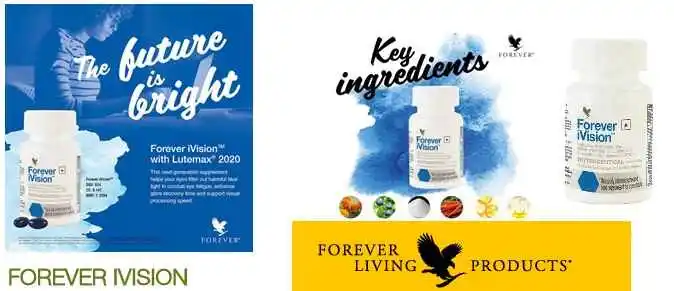
Your Eyes Never Clock Out: Master Eye Care With iVision
There is evidence that the food industry designs ultra-processed foods to be highly rewarding, to maximize craveability and to make us want more and more and more
 sundarammurali2@gmail.comMay 29, 202419 Mins read5.2k
Your Eyes Never Clock Out: A Practical Guide to Forever iVision for the Screen-Heavy Life
Ingredients, the three-carotenoid story, who it suits, and how to use it well
It’s 4:15 on a Thursday afternoon. You’ve been looking at the same spreadsheet since lunch, your phone keeps lighting up beside the keyboard, and somewhere behind your eyes there’s a dull, gritty ache you’ve trained yourself to ignore. You blink a few times. The screen looks a little flat. Later you drive home in the dark, and every oncoming headlight seems to hang around half a second longer than it used to.
Sound familiar? You’re in very large company.
Our eyes evolved for horizons, daylight and the occasional close-up job like threading a needle. We now ask them to hold focus on a glowing rectangle, about an arm’s length away, for most of our waking hours. Phones, laptops, tablets, televisions, LED bulbs overhead. None of it hurts in a dramatic way, which is exactly why it’s so easy to shrug off. The strain builds up quietly.
This guide looks at one practical piece of the puzzle: Forever iVision, an eye health supplement from the Forever Living range, manufactured by Aloe Vera of America. I’ll walk through what’s in it, why the ingredient list is shaped the way it is, who might get the most from it and, just as important, what it can’t do. We’ll also cover the everyday habits that make any supplement work harder, because a capsule on its own is never the whole story.
Grab a coffee. Maybe look out of a window for a minute first. Let’s get into it.
Why Your Eyes Are Working Overtime
Start with an honest tally of the day. A morning phone check before you’re properly upright. A laptop or desktop through working hours. A phone at lunch. Television or a late scroll to wind down. For many people that adds up to eight or ten hours in front of a lit screen, and for plenty of others it’s more.
What Screens Actually Do to Your Eyes
Here’s the part that surprises people: a good share of the discomfort has little to do with the light itself. It comes from how we look at screens. When you concentrate on text or video, you blink far less than usual. Some studies suggest the rate falls by around half. Fewer blinks mean a thinner, patchier tear film and a dry, gritty surface that makes everything feel more tiring.
Then there’s the focusing effort. Your eye muscles hold a fixed near-focus for long stretches, a bit like keeping a bicep curled for hours. Add glare from windows, overhead panels and glossy displays, and you have what eye care professionals call digital eye strain, also known as computer vision syndrome.
Common signs include:
- Tired, heavy or aching eyes by mid-afternoon
- Dryness, burning or a sandy feeling
- Blurred vision that clears when you look away
- Headaches around the brow or temples
- Neck and shoulder tension from leaning toward the screen
- Light sensitivity, or glare that bothers you more than it used to
None of these automatically signals disease. But they are your eyes asking for better conditions, and that is where sensible habits and targeted nutrition can both play a part.
Blue Light: What We Know and What We Don’t
Blue light has become a catch-all villain, so let’s keep it grounded. It’s the short-wavelength, high-energy end of visible light. The biggest source by far is the sun. Screens, LED lighting and compact fluorescent bulbs add a smaller dose, but we hold them close and stare at them for hours, often late into the evening.
What’s reasonably well established: blue-rich light in the evening can nudge your body clock and make it harder to wind down for sleep. What’s still debated: whether everyday screen exposure causes lasting damage to the retina in real people. Much of the alarming laboratory work uses exposure levels that don’t match normal use, and professional bodies have been cautious about drawing straight lines. So treat anyone selling total certainty in either direction with a little scepticism.
Here’s why it still matters for this conversation. The macula, the small central part of your retina, contains a natural yellow pigment made of carotenoids, and one of its jobs is to absorb blue light before it reaches the delicate cells underneath. Think of it as a built-in pair of sunglasses. The denser and healthier that pigment layer, the better the filter. And the raw material for it comes from what you eat. That is the logic behind any blue light protection supplement worth considering.
The Nutrient Gap Most of Us Have
Lutein and zeaxanthin, the two carotenoids that build macular pigment, come from leafy greens such as spinach and kale, plus egg yolks, corn, peppers and a handful of other foods. Estimates of typical intake in many modern diets sit at roughly one to two milligrams a day. The large AREDS2 eye study, by comparison, used 10 milligrams of lutein and 2 milligrams of zeaxanthin daily. That’s a wide gap.
A third carotenoid, meso-zeaxanthin, barely turns up in ordinary food at all. Your body makes some of it in the retina, mostly from lutein, but how efficiently that happens varies from person to person.
That’s the case for supplementation in a sentence: good food is the foundation, and most of us simply don’t eat enough of the right foods to fill the tank.
|
Daily demand on your eyes |
What can help |
|
Hours of close-up focusing |
20-20-20 breaks, a better workstation setup |
|
Reduced blinking, dry surface |
Deliberate blinking, hydration, room humidity |
|
Glare from windows and LED lighting |
Screen positioning, matte filters, glare-reducing habits |
|
Blue-rich light, especially at night |
Night mode, lower evening brightness, nutritional support for macular pigment |
|
Diets short on leafy greens and colorful produce |
More greens, eggs and peppers, plus a targeted supplement |
Your eyes don’t get a lunch break, a weekend or a sick day. The least we can do is feed them properly.
What’s Inside Forever iVision, Ingredient by Ingredient
Forever iVision isn’t a one-trick formula. It layers vitamins, an antioxidant botanical, a key mineral and a clinically studied carotenoid complex. Let’s take each piece in turn and be straightforward about the role it plays.
Bilberry Extract: The Antioxidant Botanical
Bilberry is a dark-blue European relative of the blueberry, and its colour comes from anthocyanins, a family of antioxidant compounds. You may have heard the story of British pilots in the Second World War eating bilberry jam to sharpen their night vision. It’s a wonderful tale and it has been repeated for decades, though it has never been neatly proven.
Research on bilberry extract for eyes has produced mixed results, which is worth knowing. Its place in this formula is as a source of antioxidant compounds that contribute to overall eye health support, not as the headline act.
Beta Carotene: Natural Vitamin A From a Plant Pigment
Beta carotene is the orange pigment in carrots, sweet potatoes and pumpkins. Your body converts it to vitamin A as needed, and vitamin A is central to vision. It’s part of rhodopsin, the light-sensitive pigment in your retina that lets you see in dim conditions, and it helps keep the cornea, the clear front surface of the eye, in good shape. Severe vitamin A deficiency causes night blindness, which is why the old carrot advice had a kernel of truth.
Using beta carotene as the source has a practical advantage: conversion to vitamin A is largely regulated by the body, which is one reason it is generally seen as a gentler route than loading up on preformed vitamin A. There is one important caution for smokers, which I cover in the safety notes further down.
Zinc: The Delivery Partner
Zinc rarely gets the glamour, but the retina holds some of the highest concentrations of it in the body. Its job here is practical. It helps the body mobilize and use vitamin A, supporting the vision cycle, and it contributes to maintaining healthy vision. Zinc also featured in the formulas used in the big AREDS studies. Think of it as the courier that gets the package to the right address.
Lutemax 2020: The Ingredient That Defines the Formula
If there’s a headline act, this is it. Lutemax 2020 is a branded, clinically studied ingredient derived from marigold flowers. What sets it apart is that it delivers all three macular carotenoids together: lutein, RR-zeaxanthin and meso-zeaxanthin.
As the product is positioned, it does two big things. First, it helps filter blue light from digital devices and other artificial sources, including LED and compact fluorescent lighting. Second, it supports the retina and inner eye, particularly the macula, the area responsible for your sharpest central vision and your color perception.
Studies on this ingredient have looked at markers such as macular pigment levels, visual processing speed and glare recovery. We’ll unpack those in the next section, because they explain why the three-carotenoid approach matters so much.
|
Ingredient |
What it is |
Role in the formula |
|
Bilberry extract |
Dark berry rich in anthocyanins |
Antioxidant compounds that support eye health |
|
Beta carotene |
Plant pigment, natural vitamin A source |
Supports vision, especially in low light, and the eye’s surface |
|
Zinc |
Essential trace mineral |
Helps vitamin A be used; maintains healthy vision |
|
Lutein |
Marigold-derived carotenoid |
Builds macular pigment; blue-light filtering |
|
RR-zeaxanthin |
Marigold-derived carotenoid |
Concentrates in the macula; supports pigment density |
|
Meso-zeaxanthin |
Rare macular carotenoid |
Sits at the very centre of the macula; supports pigment density |
A quick note on dose: I’m not going to guess at exact amounts per serving here. Always read the current label on your own pack for serving size and per-serving values.
The Three-Carotenoid Advantage: Why Lutein Alone Isn’t Enough
A Quick Tour of Your Macula
The macula is a tiny spot near the centre of the retina, only a few millimetres across, but it does outsized work. It’s what you use to read this sentence, recognise a face, thread a needle and tell crimson from coral. Your peripheral vision gives you the gist. The macula gives you the detail.
Imagine a camera with a superb sensor in the middle and a basic one around the edges. The macula is the superb sensor. Because it’s so valuable, it’s coated in a protective yellow layer of carotenoids called macular pigment. Good macular health support is largely about keeping that layer well supplied.
Three Carotenoids, Three Positions
Here’s the interesting bit. These three carotenoids aren’t spread evenly. Lutein sits more toward the outer parts of the macula. Zeaxanthin is found further in. Meso-zeaxanthin is concentrated right at the centre, where vision is sharpest. Each absorbs light a little differently, so together they cover more area and more of the blue spectrum than any one could alone.
Most eye supplements, as the product literature points out, supply only one of the three: lutein. That’s a reasonable starting point, but your retina actually uses three. A formula built around lutein, zeaxanthin and meso-zeaxanthin aims to mirror what is naturally found in the macula rather than leaving two-thirds of the picture blank.
What Researchers Actually Measure
- Macular pigment optical density (MPOD): a measure of how dense your protective pigment is. Higher density generally means more filtering capacity.
- Glare recovery: how quickly your vision bounces back after a bright flash, like oncoming headlights or sun glinting off a windscreen. Better glare recovery is something you feel on a night drive.
- Visual processing speed: how rapidly your visual system picks up and responds to information.
- Contrast sensitivity: how well you pick out objects against similar backgrounds, like a grey car in fog.
Those are the areas where the makers say the ingredient has been studied, and they’re all things you notice in real life: night driving, bright outdoor days, fast-moving screens and dim rooms.
Where AREDS2 Fits In
If you’ve read about eye nutrition, you’ll have met AREDS2, a large study run by the US National Eye Institute. It tested a formula containing lutein and zeaxanthin (alongside vitamins C and E, zinc and copper) in people who already had intermediate age-related macular degeneration, and found it could slow progression for some of them.
Let’s be clear about the boundaries. That research involved people with an existing condition, not healthy teenagers, and Forever iVision is a different formula. What it does show is that these carotenoids are taken seriously in mainstream eye research. If you’ve been diagnosed with macular degeneration, your eye specialist should guide your supplement choices, not a blog post, this one included.
Think of macular pigment as your retina’s built-in sunglasses. Nutrition decides how good they are.
Who Might Benefit From Forever iVision
The old image of an eye supplement is a retiree with a pill organiser. The thinking behind iVision is broader. Teens and adults of all ages are in the picture, because screens don’t check birth certificates. The aim is to support visual processing speed, help replenish macular pigment, support glare recovery and offer vision support for teens and adults who live with blue light every day.
|
Who |
Typical situation |
Why it may matter |
|
Office professionals |
Eight-plus hours on monitors |
Prolonged near work, glare, end-of-day fatigue |
|
Students and teens |
Online classes, gaming, late scrolling |
Heavy evening exposure; building good habits early |
|
Gamers and streamers |
Long sessions, bright high-contrast screens |
Visual processing demands, glare |
|
Commuters and night drivers |
Headlight glare, long drives |
Glare recovery |
|
Designers and editors |
Colour-critical screen work |
Macula and colour perception support |
|
Adults 40 and over |
Natural age-related changes |
Long-term macular support |
|
Outdoor lovers |
Bright sun, sand, snow, water |
Glare recovery and filtering |
Three Quick Scenarios
These are composites, not case studies, but you’ll probably recognise someone you know.
The dual-monitor tester. She spends ten hours a day on two screens. By late afternoon her eyes feel sandy and she squints at the second monitor. Lunch is usually takeaway, and leafy greens are rare. She’s a textbook example of someone for whom the nutrient gap is real.
The seventeen-year-old gamer. He studies online by day and plays at night. He has decades of screen exposure ahead of him. Early habits, including nutrition, set the baseline, and any supplement decision at his age belongs in a conversation with a parent and a doctor.
The evening commuter. He drives two hours home in the dark. Headlight glare has become stressful. Glare recovery is the thing he’d care about most.
Who Should Talk to a Professional First
- Anyone pregnant or breastfeeding
- Anyone taking prescription medicines, since zinc can interact with certain antibiotics and other drugs
- Anyone under 18: check the age guidance on the label and speak with a doctor
- Anyone with a diagnosed eye condition
- Current or former heavy smokers (see the safety notes below)
- Anyone with known allergies to marigold or related plants
A Five-Minute Self-Check
Before you decide anything, spend five minutes noticing how your eyes behave across an ordinary day. Jot down quick answers to these questions:
- Do your eyes feel tired or dry by mid-afternoon, and does it ease on weekends?
- How long do bright lights or headlights bother you after they pass?
- Do you hold your phone closer than you used to, or lean toward the monitor?
- How many portions of leafy greens, eggs or peppers did you eat this week?
- When did you last have a full eye exam?
If you answered mostly yes to the first three and “not many” to the fourth, you’ve found your gap. That’s useful information whether or not you choose a supplement, and it’s something to share with your optometrist.
How to Get the Most From Any Eye Supplement
A supplement is a helper, not a hero. Here’s a simple sequence you can follow.
- Read the label first. Check serving size, directions and allergen notes on your own pack, and follow them.
- Take it with a meal. Carotenoids are fat-soluble, so absorption is typically better alongside food containing some healthy fat, such as eggs, nuts, avocado or olive oil.
- Be patient and consistent. Macular pigment builds slowly. Research on carotenoid supplements usually runs for months, not days. Give it a fair run before judging.
- Use the 20-20-20 rule. Every 20 minutes, look at something 20 feet (about 6 metres) away for 20 seconds. Set a phone reminder. It’s the cheapest eye-care habit going.
- Blink on purpose. It sounds silly and it works. Do a few slow, complete blinks at every 20-20-20 break.
- Fix your workspace. Top of the screen roughly at or just below eye level, about an arm’s length away, brightness matched to the room, window glare controlled.
- Warm up your evenings. Use night mode, lower the brightness and ease off screens in the hour before bed.
- Wear sunglasses outdoors. Choose lenses that block UV. Carotenoids help your retina, but they don’t replace UV protection.
- Keep eating colour. Spinach, kale, eggs, corn, peppers, orange vegetables, berries. Supplement the diet, don’t replace it.
- Keep your eye exams. An optometrist can spot changes no supplement will ever reveal.
A Simple Eye-Friendly Day
|
When |
What to do |
|
Morning |
Take your supplement with breakfast as directed on the label; sunglasses when you head out |
|
Midday |
Put leafy greens or peppers on your plate; step outside; start the 20-20-20 breaks |
|
Afternoon |
Check for screen glare, blink deliberately, drink water |
|
Evening |
Night mode on, brightness down, screens off before bed |
|
Weekly |
A proper outdoor walk with long-distance looking |
Safety Notes You Shouldn’t Skip
- Smokers and former heavy smokers: in two large trials, high-dose beta carotene supplements were linked to a higher risk of lung cancer in smokers and asbestos-exposed workers. If that describes you, speak with your doctor before using any supplement containing beta carotene.
- Medicine interactions: zinc can affect how some antibiotics are absorbed. Tell your doctor or pharmacist what you take.
- Don’t stack blindly: if you already take a multivitamin, check the combined vitamin A and zinc totals across everything you use.
- Listen to your body: if you notice an adverse reaction, stop and seek advice.
Five Myths That Keep Cropping Up
Myth one: carrots alone will protect your eyes. Carrots give you beta carotene, which matters for vitamin A. But the macula’s pigment depends on lutein, zeaxanthin and meso-zeaxanthin, and those come mostly from greens, eggs and marigold-derived ingredients. Carrots are lovely. They’re just not the whole answer.
Myth two: blue-light glasses fix everything. Some people find them comfortable, but the evidence that they reduce eye strain is thin. The habits that move the needle are blinking, breaks and glare control. Glasses are optional. Habits aren’t.
Myth three: if my eyesight is 20/20, my eyes are fine. Sharpness on a chart tells you nothing about macular pigment density, early retinal changes or how quickly you recover from glare. A full eye exam looks at far more than a letter chart.
Myth four: more is always better. With fat-soluble nutrients and minerals like zinc, piling on extra capsules can backfire. Stick to the label, and check the totals if you take other products.
Myth five: supplements work overnight. They don’t. Anyone promising a dramatic change in a week is selling something. Build the habit, give it months, and judge fairly.
Buying Smart and Setting Realistic Expectations
What the Label Tells You
Forever iVision is manufactured by Aloe Vera of America, Inc., 13745 Jupiter Road, Dallas, Texas 75238, USA, and its country of origin is the USA. Forever Living products are generally sold through the company’s authorized distributor network and official channels, so buy from those sources. Check that the seal is intact, note the batch details and expiry date, and be wary of unfamiliar marketplace sellers offering unusually low prices.
What a Supplement Can and Can’t Do
- It can: help fill nutritional gaps in the carotenoids your macula uses, support macular health and visual comfort, and sit comfortably inside a good daily routine.
- It can’t: replace prescription glasses or contact lenses, treat or cure eye disease, fix dry eyes on its own or stand in for a regular eye exam.
A Simple 90-Day Experiment
If you do decide to try Forever iVision, treat it like a small, honest experiment rather than a leap of faith. Keep it simple and write things down, because memory is a terrible witness when it comes to subtle changes.
|
Period |
What to do |
What to note |
|
Week 1 |
Start as directed on the label; set 20-20-20 reminders |
Baseline: end-of-day eye comfort (score it 1 to 10), night-driving glare, dryness |
|
Weeks 2 to 4 |
Stay consistent; fix lighting and screen position |
Any digestive or other reactions; how often you actually remembered |
|
Weeks 5 to 8 |
Add more leafy greens and eggs to meals |
Changes in comfort scores, glare recovery, tired-eye days per week |
|
Weeks 9 to 12 |
Keep everything steady |
Compare against week one; book an eye exam if one is due |
At the end of the twelve weeks, look at your notes with a cool head. Some people will see a clear improvement in comfort, some a subtle one, and some nothing they can point to. All of those are legitimate outcomes, and your eye professional can help you decide what to do next.
When to See an Eye Professional Straight Away
- Sudden loss or sudden blurring of vision
- Flashes of light, a shower of new floaters or a curtain-like shadow
- Straight lines suddenly looking wavy or distorted (a simple Amsler grid check can reveal this)
- Persistent eye pain or redness
- Double vision
If any of these happen, don’t wait for a supplement to sort it out. Book an appointment.
Conclusion: Look After the Equipment You Can’t Replace
Go back to that 4:15 afternoon. The gritty ache, the flat screen, the lingering headlights. Most of us have decided it’s just the price of modern life. It doesn’t have to be accepted quite so passively.
Forever iVision approaches the problem with a clear idea: bilberry extract and beta carotene for antioxidant and vitamin A support, zinc to help the body use that vitamin A, and Lutemax 2020 to bring the full trio of macular carotenoids, lutein, RR-zeaxanthin and meso-zeaxanthin, into the picture. It’s a thoughtful design for the way we actually live. But it works best alongside the unglamorous basics: regular breaks, better lighting, sunglasses, a plate with some color on it and a yearly eye exam.
Your next step: pick one habit from this guide and start today. Set the 20-20-20 reminder, move your monitor, or add spinach to tonight’s dinner. If Forever iVision sounds like a fit, read the label carefully, check with your doctor or pharmacist if any of the cautions above apply to you, and give it a consistent, patient run. Your eyes have a lot of years of work ahead of them. Give them the support to match.
This article is for general information only. It isn’t medical advice, and dietary supplements are not intended to diagnose, treat, cure or prevent any disease. Consult a qualified healthcare professional before starting a new supplement.
Frequently Asked Questions
Q1. What is Forever iVision?
Forever iVision is a Forever Living dietary supplement designed to support eye health in a screen-heavy world. It combines bilberry extract, beta carotene, zinc and Lutemax 2020, a clinically studied source of lutein, RR-zeaxanthin and meso-zeaxanthin.
Q2. Who manufactures Forever iVision, and where is it made?
It is manufactured by Aloe Vera of America, Inc., 13745 Jupiter Road, Dallas, Texas 75238, USA. The country of origin is the USA.
Q3. What are the main ingredients?
Bilberry extract, beta carotene (natural vitamin A), zinc and Lutemax 2020. Always check the current label on your pack for the full ingredient list, amounts and allergen information.
Q4. What is Lutemax 2020?
Lutemax 2020 is a branded, clinically studied ingredient from marigold flowers. It supplies all three macular carotenoids, lutein, RR-zeaxanthin and meso-zeaxanthin, and is positioned to support the macula and help filter blue light.
Q5. What are lutein, RR-zeaxanthin and meso-zeaxanthin?
They are the three carotenoids found in the macular pigment of the retina. Lutein and zeaxanthin come from food, while meso-zeaxanthin is rare in the diet and is partly made in the retina from lutein.
Q6. Why does having all three carotenoids matter?
Each sits in a slightly different part of the macula and absorbs light a little differently. Supplying all three mirrors the natural pigment more closely than a lutein-only product does.
Q7. What does bilberry extract do in the formula?
It provides anthocyanins, antioxidant compounds that contribute to eye health support. Research on bilberry and vision is mixed, so it’s best seen as a supporting ingredient rather than the main driver.
Q8. Why is beta carotene included?
Beta carotene is a natural source of vitamin A, which the retina needs to form the pigment used in low-light vision. It also supports the health of the eye’s surface.
Q9. What role does zinc play?
Zinc helps the body use vitamin A and contributes to maintaining healthy vision. The retina contains high concentrations of this mineral.
Q10. Does it really filter blue light?
The macular carotenoids naturally absorb blue light, and the product is positioned to help support that filtering. It works inside the eye, so it does not replace screen settings, breaks or good lighting.
Q11. Is blue light from screens actually harmful?
Evening blue light can affect sleep. Whether ordinary screen use damages the retina in the long term is still debated. Eye strain from screens is more often due to reduced blinking, focusing effort and glare.
Q12. Can teens take Forever iVision?
The product positioning includes teens as well as adults, but you should check the age guidance on the label and talk to a doctor before giving any supplement to someone under 18.
Q13. Is it only for older adults worried about macular degeneration?
No. While macular health matters more with age, the formula is aimed at anyone with heavy screen and artificial light exposure who wants to support macular pigment, visual processing speed and glare recovery.
Q14. How long before I notice a difference?
Macular pigment builds gradually, and studies on carotenoid supplements usually run for months. Some people notice comfort changes sooner, others little at all, so be consistent and patient.
Q15. What is the best time of day to take it?
Whenever you can take it consistently, ideally with a meal. Many people link it to breakfast or lunch so it becomes a routine. Follow the directions on your label.
Q16. Should I take it with food?
Yes, with a meal that contains some fat is usually best. Carotenoids are fat-soluble, so they are typically absorbed better alongside foods such as eggs, nuts, avocado or olive oil.
Q17. Can it replace a healthy diet?
No. It’s meant to supplement food, not replace it. Leafy greens, eggs, peppers and colourful produce supply a range of nutrients that no single capsule can match.
Q18. Can it replace my glasses or contact lenses?
No. Supplements don’t correct refractive errors like short-sightedness, long-sightedness or astigmatism. Keep wearing your prescribed lenses and attend regular eye tests.
Q19. Can it treat or cure macular degeneration or other eye diseases?
No. It is a dietary supplement meant to support eye health, not a treatment. If you have a diagnosed eye condition, follow your specialist’s advice about supplements.
Q20. Will it fix dry eyes?
Not on its own. Dry, tired eyes from screen use often respond best to blinking more, taking breaks, adjusting your workspace and, if needed, advice from an eye professional.
Q21. Is it safe for smokers?
Because it contains beta carotene, smokers and former heavy smokers should speak to their doctor first. Large trials found high-dose beta carotene supplements were linked to higher lung cancer risk in smokers.
Q22. Can I take it with a multivitamin or other supplements?
Possibly, but check the combined totals of vitamin A and zinc across all products. If you’re unsure, ask a pharmacist or doctor to review your full list.
Q23. Is it suitable during pregnancy or breastfeeding?
Speak to your doctor or midwife first. Vitamin A intake needs particular care during pregnancy, and general supplement decisions should be made with a professional.
Q24. Are there any side effects?
Most people tolerate carotenoid supplements well, but individual reactions are possible, including digestive upset. Stop use and seek advice if you notice an adverse reaction.
Q25. Can it interact with medicines?
Zinc can affect the absorption of certain antibiotics and other drugs. Tell your pharmacist or doctor about any prescription medicines you take before starting.
Q26. Will it help with glare when driving at night?
Glare recovery is one of the areas where macular carotenoids have been studied, and the product is positioned to support it. It’s not a substitute for correct glasses, clean windscreens or avoiding driving when your vision feels off.
Q27. How is it different from a regular lutein supplement?
Many eye supplements provide only lutein. Forever iVision with Lutemax 2020 supplies lutein, RR-zeaxanthin and meso-zeaxanthin, plus bilberry extract, beta carotene and zinc.
Q28. Which foods naturally provide these nutrients?
Spinach, kale, other dark leafy greens, egg yolks, corn and peppers provide lutein and zeaxanthin. Carrots, sweet potatoes and pumpkin provide beta carotene. Meso-zeaxanthin is scarce in ordinary food.
Q29. How should I store it?
Follow the storage instructions on the label. In general, keep supplements in a cool, dry place away from direct sunlight and out of reach of children.
Q30. How can I make sure I’m buying a genuine product?
Buy through Forever Living’s authorised distributors and official channels, check the seal, batch information and expiry date, and be cautious with unknown online sellers and prices that seem too good to be true.
Disclaimer : Forever Living products are under Health supplement / Nutraceutical categories. The product is not intended to diagnose, prevent, treat or cure any disease. Consult your medical care practitioner or dietitian in case of pregnancy, lactation or if on any medication. NOT FOR MEDICINAL USE. Do not exceed the stated recommended daily usage. Store out of the reach of children in a cool, dry place. Please refer individual product label for further details.

Review Overview
Summary
Vestibulum viverra gravida fringilla. Suspendisse accumsan purus quis augue lobortis quis sagittis
The Pros
Colors Size StyleThe Cons
Expensive Duration quality- Design2
- Speed2.5
- Saving4.5
- Features3



The Dress Style Influencers are Wearing Right Now
There is evidence that the food industry designs ultra-processed foods to be highly rewarding, to maximize craveability and to make us want more...


Forever Garlic-Thyme : Clinical Facts & Health Benefits
Your Grandmother’s Two Favorite Pantry Herbs, Now in a Soft gel: The...
What Forever Aloe Turm Does to Your Body Will Surprise You
Forever Aloe Turm: What These Aloe-and-Turmeric Lozenges Actually Do, and How to...

Forever Aloe Peaches : Turn Your Daily Aloe Routine To Joy
Forever Aloe Peaches: The 1-Liter Bottle That Turns "Drink Your Aloe" From...

Forever Aloe Vera Gel : The 99.7% Pure Leaf in a Bottle
Forever Aloe Vera Gel: The 99.7% Pure Bottle That's As Close to...




Leave a comment