
Tired of the 3 PM Crash? Try Forever Bee Honey Instead
There is evidence that the food industry designs ultra-processed foods to be highly rewarding, to maximize craveability and to make us want more and more and more
 sundarammurali2@gmail.comJune 5, 202419 Mins read148
That 3 PM Crash Isn’t Going Away Until You Fix How You’re Feeding It — Here’s Where Forever Bee Honey Comes In
It’s 3:14 in the afternoon and you’ve just read the same email three times without absorbing a single word of it. Your coffee’s gone cold. There’s a granola bar wrapper in the trash that promised sustained energy and delivered about forty minutes of it before dumping you right back where you started. Sound familiar? Almost everyone who works at a desk, drives for a living, or just tries to get through a normal day knows this exact feeling — the mid-afternoon wall that shows up no matter how well you slept.
Most of us solve it the same way: more caffeine, more sugar, or both, stacked on top of a system that’s already running on fumes. It works, sort of, for a little while. Then the crash comes back harder. Somewhere along the way, a lot of people started looking for something gentler — not a stimulant that borrows energy from tomorrow, but something that just quietly does its job.
That’s the conversation that keeps bringing people back to honey, and specifically to a raw, single-ingredient product like Forever Bee Honey. It’s not flashy. There’s no caffeine jolt, no artificial flavoring, no long ingredient list to decode. It’s mountain-harvested honey from the Spanish countryside — full stop. But there’s more going on in that simplicity than you’d expect, and it’s worth understanding before you write it off as just another jar of sweetener in the pantry.
This isn’t going to be a breathless sales pitch dressed up as an article. It’s a straightforward look at what mountain-harvested honey actually is, why the sourcing details on the label matter more than they seem to, how it stacks up nutritionally against the sweeteners already sitting in your kitchen, and where it realistically fits into daily life — including the limits worth knowing before you treat any honey as more than what it is.
What Actually Makes Forever Bee Honey Different
Walk down the honey aisle of almost any grocery store and you’ll see a wall of bottles that all look roughly the same — golden liquid, cute bear-shaped container, some vague promise about being “100% natural.” What’s actually inside those bottles varies a lot more than the packaging lets on. A significant share of commercial honey on store shelves has been ultra-filtered and heat-processed to the point where it’s lost most of the pollen, enzymes, and antioxidant compounds that made raw honey worth eating in the first place. Some of it isn’t even honey by strict definition once it’s been diluted with corn syrup or rice syrup — a problem food safety investigators have flagged repeatedly over the past decade.
Forever Bee Honey sidesteps that whole mess by keeping the ingredient list to exactly one item: honey. No added sugar, no syrup, no preservatives, no artificial coloring. What you’re getting is pure honey harvested from mountain bee colonies in Spain, and that single detail — mountain harvesting — actually matters more than most people realize.
Bees working at higher elevations have a smaller, more specific window of blooming plants to draw from, and they take longer to build up their honey stores because the growing season up there is shorter and the forage is more scattered. That slower production process concentrates the flavor in a way lowland, high-volume honey rarely achieves. It’s the same logic that applies to a slow-fermented wine versus a mass-produced one — time in the process changes the final character of the product, not just the speed of getting it to market.
The Terrain Behind the Taste
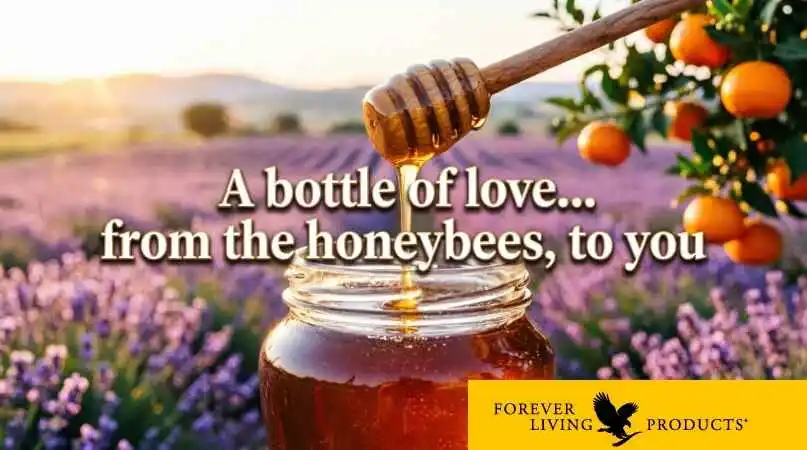
The bees behind this particular honey forage across the Spanish countryside, moving between lavender fields, rosemary hillsides, and groves of orange trees depending on the season. That’s not marketing flavor text — it’s the actual botanical source of the honey’s character. Lavender and rosemary nectar tend to produce honey with a slightly herbal, almost savory undertone, while orange blossom nectar contributes a citrus brightness that cuts through the richness. Layer those together across a single harvest and you get something noticeably more complex than a honey made from a single monoculture crop.
That complexity is why people who taste it side-by-side with a standard supermarket honey often describe Forever Bee Honey as darker, thicker, and slower to finish on the palate — with sweet spice notes showing up after the initial sweetness fades. It’s the kind of honey that rewards actually tasting it plain off a spoon instead of only ever using it to sweeten something else.
https://foreverliving.com/ind/en-us/home

Need this product , Open the above site, click join , enter your details ,( No need to furnish any ID now ) use sponsor ID 910707421238 create your FBO ID, down load the app Forever in your mobile and order from the store.
The Adulteration Problem, and Why It Changed How People Shop for Honey
It’s worth spending a moment on why single-ingredient honey has become something people actively search for rather than assume by default. Over the past several years, testing programs run by food safety authorities in the United States, Europe, and Asia have repeatedly found honey on store shelves cut with cheaper sugar syrups — sometimes rice syrup, sometimes corn syrup blends engineered to dodge older detection methods. One widely cited testing sweep of imported honey found a startling share of samples failed purity testing outright.
That backdrop is exactly why a short, single-ingredient label carries real weight now. It’s not just a marketing preference — it’s become one of the more reliable signals a shopper actually has, short of sending a jar off for isotope-ratio lab testing, that what’s in the bottle is what the label says it is.
Traceability Matters More Than Buzzwords
It’s easy for any food brand to slap “pure” or “natural” on a label without much behind it. What actually backs that claim up is traceability — knowing the country of origin, the manufacturer, and the supply chain behind the product, rather than a vague “blend of EU and non-EU honeys” disclosure that a lot of private-label honey brands are legally allowed to use without specifying countries at all. Forever Bee Honey’s label spells out exactly where it’s made and by whom: Mielso, S.A. in Almazora, Spain, for Aloe Vera of America, Inc. That level of specificity isn’t required by law in most markets, which makes it notable when a brand includes it anyway.
Honey as a Natural Energy Booster — What’s Actually Happening
Here’s where it’s worth being precise instead of hand-wavy, because “natural energy booster” gets slapped on a lot of products that don’t earn the label. Honey’s energy contribution comes down to its sugar composition. Unlike refined table sugar, which is almost entirely sucrose, honey is a blend of fructose and glucose in slightly different ratios depending on the floral source — typically somewhere around 38% fructose and 31% glucose, with water and trace amounts of enzymes, minerals, and pollen making up the rest.
Glucose is your body’s fast fuel — it gets absorbed quickly and used almost immediately by your muscles and brain. Fructose is metabolized more slowly, largely by the liver, which means it doesn’t hit your bloodstream all at once. The practical result of that combination is a release profile that tends to feel less like a spike-and-crash and more like a steadier climb and gentler decline, especially compared to a can of soda or a straight sugar hit.
This is part of why you’ll see honey show up so often in endurance sports nutrition — trail runners, cyclists, and hikers have used it for exactly this reason for a long time, well before it became a wellness trend. It’s an easily digestible carbohydrate source that doesn’t require the digestive workload of solid food, which matters when you need fuel without wanting a heavy meal sitting in your stomach.
What Else Honey Is Carrying Besides Sugar
Sugar is the headline, but it’s not the whole story. Minimally processed honey also carries trace amounts of enzymes — including the amylase and invertase bees themselves add during honey production — along with small quantities of B vitamins, minerals like potassium and calcium, and polyphenol compounds that function as antioxidants. None of these show up in large enough amounts to replace a multivitamin or a proper diet, and nobody should treat honey as a primary nutrient source. But it’s a meaningfully different nutritional package than plain white sugar, which carries essentially nothing besides sweetness and calories.
This is also where heavy processing does real damage. High-heat pasteurization and aggressive filtration — common in mass-market honey production aimed at preventing crystallization and extending shelf appeal — tend to degrade those enzymes and reduce pollen content substantially. Minimally processed honey retains more of that original composition, which is part of why raw and lightly processed honeys are the ones showing up in most of the nutritional research on honey’s health properties.
How It Stacks Up Against Coffee and Refined Sugar
Coffee’s energy effect comes from caffeine blocking adenosine receptors in your brain — it doesn’t add fuel, it just masks fatigue signals for a while, which is exactly why the crash afterward can feel so rough. Refined sugar dumps glucose into your bloodstream fast, triggers a sharp insulin response, and then leaves you lower than where you started once that insulin has done its job clearing the sugar out.
Honey isn’t a replacement for either of those in every situation — if you need the alertness effect of caffeine, honey isn’t going to substitute for that. But as a sweetener and a snack-time energy source, it tends to sit in a gentler middle ground: real, usable fuel without the same steep drop-off. A lot of people find that swapping an afternoon sugary snack for a spoonful of honey, maybe stirred into tea, closes the energy gap without the jitters or the 4 PM crash that follows a candy bar.
Honey’s blend of fast and slow-releasing natural sugars tends to feel like a steadier climb and gentler decline — not a spike-and-crash.
Beyond the Spoon: Everyday Ways People Actually Use It
One of the most common questions about any specialty honey is simple — okay, but what do I actually do with it? The honest answer is that it slots into more of your day than you’d expect, and it doesn’t require a recipe binder to use well.
The most straightforward pairing, and one the brand itself points to directly, is stirring it into a warm or iced cup of herbal tea — Forever Aloe Blossom Herbal Tea being the obvious pairing here, but really any mild herbal or green tea works. Honey dissolves cleanly into warm liquid and its floral notes tend to complement herbal blends rather than fight with them the way refined sugar can flatten a tea’s flavor.
A Few Practical Ways to Work It Into Your Day
- Stirred into hot or iced herbal tea as a natural sweetener that adds flavor complexity instead of just sweetness
- Drizzled over plain yogurt or oatmeal in the morning as a steadier alternative to flavored syrups
- Whisked into a simple vinaigrette with olive oil and lemon for a salad dressing with real depth
- A small spoonful before a workout, run, or long meeting as a quick, easily digestible source of natural carbohydrates
- Paired with sharp cheese on a cheese board — the sweetness and the savory spice notes both hold their own against strong flavors
- Mixed into warm water with lemon first thing in the morning as a lighter alternative to a sugary breakfast drink
A Simple Morning Ritual Worth Trying
One habit that comes up often among people who keep a jar of this on hand: a small spoonful stirred into warm water with fresh lemon juice, taken first thing before breakfast. It’s not a detox and it doesn’t “flush toxins” the way some corners of the internet claim — that framing oversells what’s happening. What it actually offers is a gentle, hydrating start to the day with a bit of natural sweetness instead of jumping straight to coffee or a sugary breakfast item, which some people find makes the rest of their morning routine feel less rushed.
Where It Doesn’t Belong
Honey isn’t ideal for high-heat cooking where you want to preserve as much of its natural character as possible — intense heat can break down some of the more delicate compounds and shift the flavor toward simple sweetness. If you’re baking with it, it works, but expect a denser, moister result than sugar gives you, and you’ll usually need to reduce other liquids slightly in the recipe to compensate.
Getting the Portion Size Right
It’s easy to treat any “natural” sweetener as something you can use freely, but honey is still a concentrated sugar source and portion size matters regardless of how it’s sourced. A single tablespoon is a reasonable everyday serving for most healthy adults — enough to sweeten a mug of tea or top a bowl of oatmeal without overdoing it. Following the recommended daily usage printed on the label is the simplest way to keep that in check, especially if you’re using it more than once a day.
https://foreverliving.com/ind/en-us/home
Need this product , Open the above site, click join , enter your details ,( No need to furnish any ID now ) use sponsor ID 910707421238 create your FBO ID, down load the app Forever in your mobile and order from the store.
How It Compares to Other Sweeteners on the Shelf
It helps to see Forever Bee Honey next to the other sweeteners most people already have in their kitchen, because the differences aren’t always obvious from the outside. Sweetness is sweetness on the surface, but the source, processing, and sugar composition behind each option change how your body handles it and what, if anything, you’re getting beyond calories.
Table Sugar
Refined white sugar is pure sucrose, stripped of everything else during processing. It sweetens fast, offers zero additional compounds, and produces the sharpest spike-and-crash pattern of any common sweetener. Honey brings a different sugar ratio, a slower fructose component, and trace compounds that sugar simply doesn’t have.
Maple Syrup and Agave
Maple syrup is another minimally processed natural sweetener, with its own mineral profile, particularly manganese and zinc — but its flavor is distinctly different, and it’s a plant-derived product rather than bee-derived, so it works for strict vegan diets in a way honey doesn’t. Agave syrup markets itself as a health-conscious choice, but it’s typically much higher in fructose than honey — often 70 to 90% — which changes how it’s metabolized and doesn’t necessarily make it the gentler option it’s often presented as.
Artificial and Zero-Calorie Sweeteners
Artificial sweeteners solve a different problem entirely — they remove calories and sugar altogether, which matters for specific dietary goals. But they don’t provide any energy at all, and some people find the aftertaste or the ongoing questions around long-term effects of certain artificial sweeteners enough of a reason to look for a natural alternative instead. Honey isn’t trying to compete in that low-calorie category — it’s a real, full-calorie food, just a more thoughtfully sourced one.
Reading the Label: What’s In the Bottle and What Isn’t
Ingredient transparency matters more with honey than with most pantry staples, largely because the honey industry has a well-documented history of adulteration — cutting real honey with cheaper syrups to stretch volume and margins. It’s a big enough problem that food regulators in multiple countries have run testing programs specifically targeting mislabeled honey.
Forever Bee Honey’s ingredient list is refreshingly short: honey. That’s it. No preservatives, no artificial flavors, no added coloring. It’s manufactured by Mielso, S.A. in Almazora, Spain, and produced for Aloe Vera of America, Inc. — part of the broader Forever Living product family, which built its reputation on straightforward, minimally processed formulations across its supplement lineup.
It’s worth being direct about what this product is and isn’t. It’s categorized as a health supplement or nutraceutical, and like any product in that category, it’s not intended to diagnose, prevent, treat, or cure any disease. It’s not for medicinal use, and anyone pregnant, breastfeeding, or on medication should check with a medical practitioner or dietitian before adding any new supplement — including honey — to a regular routine. Straightforward guidance, but worth repeating because it’s easy to skim past on a food label.
For anyone curious about verifying purity at home, it’s worth knowing that most of the informal “tests” that circulate online — dropping honey in water to see if it dissolves, checking whether it sticks to a spoon, watching how it burns on a matchstick — aren’t reliable indicators of purity. Actual adulteration testing requires laboratory methods like isotope ratio analysis or specialized chromatography, which is exactly why sourcing transparency and a short ingredient list matter more than any kitchen trick.
Who It’s Actually Good For — and Who Should Think Twice
Forever Bee Honey is vegetarian-friendly and gluten-free, which puts it within reach of a wide range of dietary approaches. It’s worth flagging that honey, as an animal-derived product made by bees, doesn’t fit a strict vegan diet even though it fits vegetarian guidelines comfortably — a distinction that trips people up more often than you’d expect.
For most healthy adults, honey in reasonable amounts as part of a balanced diet is a low-risk addition. Athletes and anyone with an active lifestyle often find it useful specifically because of that steadier energy release discussed earlier. People managing blood sugar closely, including those with diabetes, need to treat honey the way they’d treat any concentrated sugar source — it still raises blood glucose, just with a somewhat different absorption curve than table sugar, and portion size still matters enormously.
One safety note that applies to any raw or unpasteurized honey, not just this one: it should never be given to infants under twelve months old, due to the small but real risk of infant botulism from bacterial spores that can be present in honey. This is standard, well-established pediatric guidance and applies across brands, not something specific to Forever Bee Honey — but it’s important enough to repeat clearly.
Once a child is past that one-year mark, honey is generally considered a normal part of a varied diet, in age-appropriate amounts. Older adults, too, are generally fine with moderate honey consumption, though the same blood-sugar caution that applies to diabetics is worth keeping in mind for anyone managing insulin resistance or metabolic conditions regardless of age.
Common Honey Myths, Quickly Sorted Out
Honey attracts a surprising amount of misinformation for such a simple product. A few of the most persistent claims are worth addressing directly, since they come up constantly in conversations about products like this one.
“Honey Never Expires, So Storage Doesn’t Matter”
It’s true that properly stored honey has an extremely long shelf life — archaeologists have found edible honey in ancient Egyptian tombs. But “properly stored” is doing real work in that sentence. Moisture contamination, exposure to heat, or an unsealed lid can all degrade quality and, in rare cases, allow fermentation to begin. Keeping the lid sealed and storing it in a cool, dry place, as the label instructs, is what actually delivers on that long-shelf-life reputation.
“Crystallized Honey Has Gone Bad”
This is probably the single most common misconception about raw honey, and it’s the opposite of true. Crystallization is a natural process driven by the glucose-to-water ratio in the honey and tends to happen more, not less, in purer, less-processed honey. Heavily filtered commercial honey is often engineered specifically to resist crystallization for longer, which ironically makes crystallization one of the more reassuring signs that a honey hasn’t been over-processed.
“Local Honey Cures Allergies”
This one is popular and largely unproven. The theory is that consuming small amounts of local pollen through honey builds tolerance to local allergens over time, similar to allergy shots. The problem is that most allergy-triggering pollen — from grasses, trees, and ragweed — is wind-pollinated and rarely ends up in bee-collected honey in meaningful amounts, since bees are gathering nectar from flowering plants, not the airborne pollen that triggers seasonal allergies. Honey can still be a pleasant, natural part of your diet — it’s just not a scientifically validated allergy treatment, and it shouldn’t replace medical allergy care.
The Sourcing Story: Why Spain, and Why It Matters
There’s a reason the honey’s origin gets top billing rather than being buried in fine print. Spain has a long-standing beekeeping tradition, and its mountain and countryside regions offer the kind of biodiverse forage — wild lavender, rosemary scrub, citrus groves — that produces genuinely distinctive multi-floral honey rather than the single-crop monoculture honey that dominates mass production.
There’s also a sustainability angle that’s easy to overlook. Honeybee colonies are remarkably productive by nature, typically producing three to four times more honey than the hive actually needs to survive winter. That surplus is what beekeepers have harvested for thousands of years without threatening colony survival — a practice that predates industrial agriculture entirely and, done responsibly, remains compatible with healthy bee populations rather than a threat to them.
Given the ongoing conversations around pollinator health and colony collapse in commercial beekeeping, sourcing honey from operations that work with the rhythms of mountain bee colonies rather than forcing high-volume output is a detail that carries more weight than it might first appear.
This fits a broader pattern in Forever Living’s product philosophy, which has built its catalog around minimally processed, single-source ingredients — most visibly with its aloe vera line — rather than heavily engineered formulations. Forever Bee Honey slots into that same approach: one ingredient, clearly sourced, without much standing between the hive and the bottle.
Final Thoughts
None of this means honey is some miracle fix for the modern energy crash — nothing single-ingredient ever is. But there’s a real, evidence-backed case for it as a gentler, more sustainable option than the sugar-and-caffeine cycle most of us default to without thinking twice. Forever Bee Honey earns its place in that conversation specifically because of what it doesn’t contain: no fillers, no syrup cutting, no processing that strips out what made the honey worth harvesting in the first place. Just pure, mountain-harvested honey with a flavor profile that reflects exactly where it came from.
If your afternoons keep running into that same wall, it might be worth trading one of your usual sugar hits for a spoonful of something slower and more honest. It won’t undo a bad night’s sleep or replace a genuinely balanced diet, and it’s not trying to. What it offers is simpler than that: one clean ingredient, sourced with some actual care, doing one job well.
Pick up a bottle of Forever Bee Honey, stir it into your next cup of tea, and see how the rest of your afternoon actually feels.
https://foreverliving.com/ind/en-us/home
Need this product , Open the above site, click join , enter your details ,( No need to furnish any ID now ) use sponsor ID 910707421238 create your FBO ID, down load the app Forever in your mobile and order from the store.
FAQs
| Question | Answer |
| What exactly is Forever Bee Honey? | It’s a 100% pure, mountain-harvested honey sourced from bee colonies in the Spanish countryside, with honey as the only ingredient — no additives, syrups, or preservatives. |
| Is Forever Bee Honey raw or processed? | It’s minimally processed to preserve its natural character. It isn’t ultra-filtered or heavily heat-treated the way many mass-market honeys are, which helps retain more of honey’s natural compounds and flavor complexity. |
| Where does the honey come from? | It’s harvested from mountain bee colonies in the Spanish countryside, where bees forage on lavender, rosemary, and orange blossoms. It’s manufactured by Mielso, S.A. in Almazora, Spain. |
| Is Forever Bee Honey gluten-free? | Yes, it’s labeled gluten-free, making it suitable for people avoiding gluten for dietary or medical reasons. |
| Is it vegetarian-friendly? | Yes, it’s vegetarian-friendly. It’s worth noting that honey, being an animal-derived product from bees, isn’t considered vegan under most strict vegan standards, even though it fits vegetarian diets. |
| Is Forever Bee Honey vegan? | No. Honey is produced by bees, so it doesn’t meet the criteria of a strict vegan diet, even though it’s fine for vegetarian diets. |
| Does Forever Bee Honey contain any additives or preservatives? | No. The ingredient list is honey and honey alone — no artificial flavors, coloring, or preservatives. |
| How does honey act as a natural energy booster? | Honey’s blend of glucose and fructose provides a mix of fast and slower-releasing natural sugars, giving many people a steadier energy lift compared to refined sugar or caffeine alone. |
| Can I use it as a substitute for sugar in coffee or tea? | Yes. It dissolves well in warm liquids and pairs especially well with herbal teas like Forever Aloe Blossom Herbal Tea, adding flavor complexity along with sweetness. |
| How many calories are in a serving of Forever Bee Honey? | Like most pure honeys, it’s calorie-dense per serving since it’s a concentrated natural sugar source. Check the product’s nutrition panel for the exact per-serving values, and use the %DV guidance based on a 2,000-calorie diet as your reference point. |
| Is Forever Bee Honey safe for diabetics? | Honey still raises blood glucose and should be treated as a concentrated sugar source. Anyone managing diabetes should consult their doctor or dietitian before adding it regularly and should watch portion sizes closely. |
| Can I give this honey to my baby? | No. Honey of any kind, including this one, should never be given to infants under 12 months old due to the risk of infant botulism. This is standard medical guidance that applies to all honey, not just this product. |
| Is Forever Bee Honey safe during pregnancy? | The product label advises consulting a medical care practitioner or dietitian if pregnant or lactating before use, which is sound general guidance for any supplement product. |
| What does Forever Bee Honey taste like? | It’s described as rich, smooth, and dark, with layered notes from lavender, rosemary, and orange blossom nectar, plus a hint of sweet spice — more complex than a typical single-source supermarket honey. |
| Why is it darker than some other honeys? | Mountain bees take longer to produce their honey due to a shorter foraging season and more limited blossom availability, which tends to concentrate flavor and deepen color compared to fast-produced lowland honey. |
| How should I store Forever Bee Honey? | Store it in a cool, dry place out of reach of children, as stated on the product label. Honey doesn’t require refrigeration and has a very long natural shelf life when stored properly. |
| Will it crystallize over time? | Pure, minimally processed honey can naturally crystallize over time — this is a normal characteristic, not a sign of spoilage. Gently warming the jar in warm water can return it to a liquid state. |
| How is this different from the honey I buy at the grocery store? | Many mass-market honeys are heavily filtered, heat-processed, and sometimes diluted with cheaper syrups. Forever Bee Honey is a single-ingredient, mountain-harvested product without that processing or dilution. |
| Is Forever Bee Honey the same as Manuka honey? | No. Manuka honey comes specifically from Manuka bush nectar in New Zealand and Australia and is marketed for specific antibacterial properties. Forever Bee Honey is a multi-floral Spanish honey sourced from lavender, rosemary, and orange blossom. |
| Can athletes use honey for energy before or during exercise? | Yes, honey has long been used in endurance sports nutrition as an easily digestible natural carbohydrate source that many find easier on the stomach than heavier snacks. |
| How much Forever Bee Honey should I take per day? | Follow the recommended usage on the product label and don’t exceed the stated daily amount. Since it’s a concentrated sugar source, moderation matters even though it’s a natural product. |
| Does Forever Bee Honey have any medicinal claims? | No. It’s explicitly labeled as not intended to diagnose, prevent, treat, or cure any disease, and it’s not for medicinal use. It’s a food and nutraceutical product, not a drug. |
| Can I cook or bake with Forever Bee Honey? | Yes, though high heat can diminish some of its delicate flavor notes. It works well in baking, but expect a denser, moister result than sugar and you may need to slightly reduce other liquids in the recipe. |
| Is Forever Bee Honey suitable for people with allergies? | Anyone with known bee product allergies should avoid honey altogether. As with any new food, if you have known sensitivities, check with your doctor before trying it. |
| What makes mountain-harvested honey special? | Mountain bee colonies work with a narrower, seasonal range of blossoms and a longer production timeline, which tends to produce a more concentrated, layered flavor compared to fast, high-volume honey production. |
| Who manufactures Forever Bee Honey? | It’s manufactured by Mielso, S.A. in Almazora, Spain, and produced for Aloe Vera of America, Inc. in Dallas, Texas, as part of the Forever Living product line. |
| Is Forever Living a legitimate company? | Forever Living Products is an established company in the health and wellness supplement space, known for aloe- and bee-derived product lines, including Forever Bee Honey. |
| Can Forever Bee Honey replace my morning coffee? | It’s not a like-for-like replacement — coffee’s alertness effect comes from caffeine, which honey doesn’t contain. But as a steadier source of natural energy alongside or instead of a sugary breakfast, it can meaningfully reduce mid-morning crashes. |
| Does honey have any nutritional value beyond sugar? | Raw and minimally processed honey contains trace amounts of enzymes, antioxidants, and minerals alongside its natural sugars, though it should still be viewed primarily as a sweetener rather than a significant nutrient source. |
| Where can I buy Forever Bee Honey? | It’s available through Forever Living’s official distribution channels and authorized distributors; check the official Forever Living website or a verified distributor for current availability and pricing. |
Disclaimer : Forever Living products are under Health supplement / Nutraceutical categories. The product is not intended to diagnose, prevent, treat or cure any disease. Consult your medical care practitioner or dietitian in case of pregnancy, lactation or if on any medication. NOT FOR MEDICINAL USE. Do not exceed the stated recommended daily usage. Store out of the reach of children in a cool, dry place. Please refer individual product label for further details.
https://foreverliving.com/ind/en-us/home
Need this product , Open the above site, click join , enter your details ,( No need to furnish any ID now ) use sponsor ID 910707421238 create your FBO ID, down load the app Forever in your mobile and order from the store.

7 food myths dietitians wish people would stop believing
There is evidence that the food industry designs ultra-processed foods to be highly rewarding, to maximize craveability and to make us want more...


How Sacred Tulsi Van Honey Reboot Your Mind and Body
There is evidence that the food industry designs ultra-processed foods to be...




Leave a comment